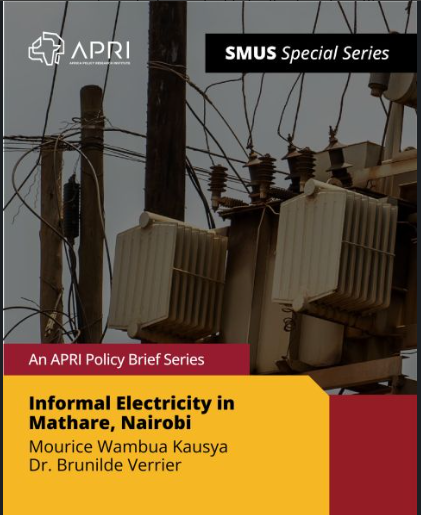
The piece examines why 86% of households in Nairobi’s Mathare settlement still rely on informal electricity connections despite years of formal electrification efforts. Drawing on a systems mapping exercise and stakeholder workshop with residents, community leaders, resellers, and utility representatives, it frames this not as simple “illegality” but as a “wicked problem”, shaped by affordability, marginalisation, and years of strained trust between communities and the utility.
Some of what stands out: informal resellers connect households instantly, with no paperwork, charging a flat KES 250–500 a month- far below Kenya Power’s per-unit rate. When authorities respond with crackdowns, dismantling lines and removing transformers, the disruption often hits legal and illegal customers alike, deepening resentment and pushing people straight back to informal supply.
The way forward, according to the article:
• Structured dialogue platforms to move communication beyond moments of crisis;
• Safety-first regularisation starting with the most dangerous connections, not blanket bans;
• Flexible payment innovation, paired with the right tariff structures and subsidies;
• Formalisation embedded within broader settlement upgrading, with distributional monitoring to protect the poorest households