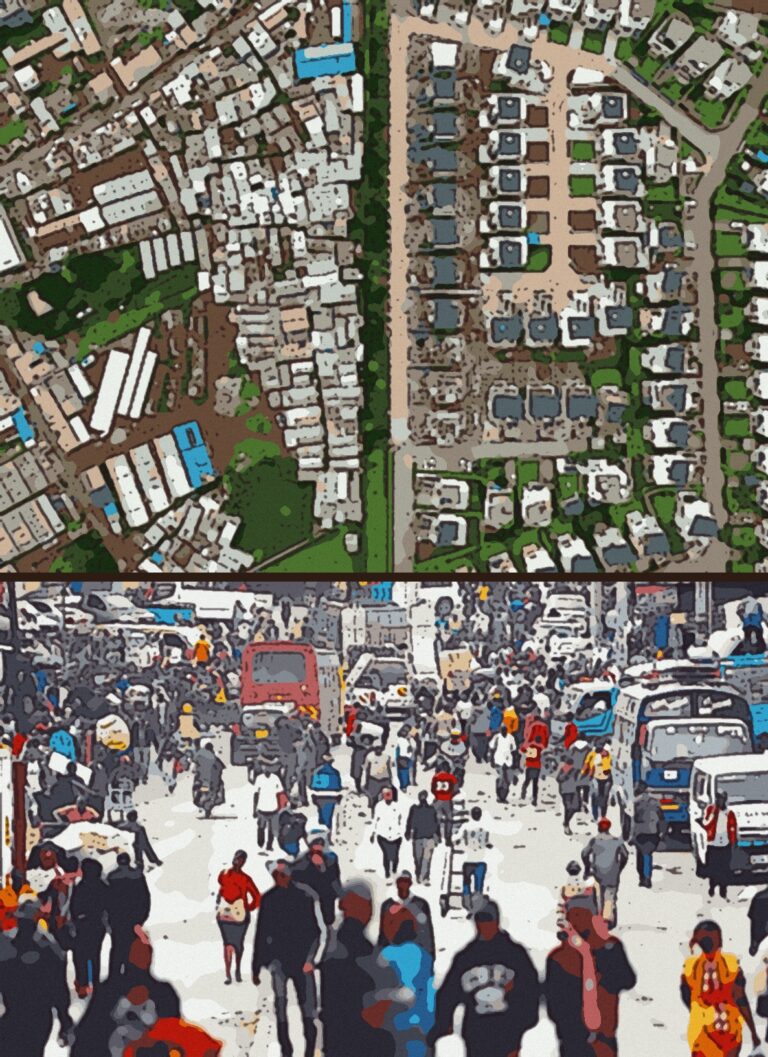
In response to the rapid urbanisation in Kenya, the National Urban Development Policy (NUDP) 2016, was formulated to guide sustainable urbanisation. The next urban development policy should address perennial challenges such as inadequate infrastructure and services; poor housing; environmental degradation; high rates of unemployment; and the increasing prevalence of urban poverty and inequality faced by urban residents and managers alike. Additionally, the urban policy development process should provide a platform for all stakeholders to make contributions and shape the final policy outcome. This aligns with the spirit of the 2010 Kenyan Constitution of active citizen participation in the development process.
The 2016 NUDP’s vision was projected to promote secure, well governed, competitive and sustainable urban areas that contribute to the realisation of the broader national development goals articulated in the Constitution of Kenya and Vision 2030.
A New National Urban Development Policy - 2026 And Beyond
Previous policy and legal instrument development processes have often been characterized by top-down planning approaches in which decisions are made devoid of residents and citizens most affected by them. Technical expertise is recognized, along with the growing understanding that sustainable urban development cannot be achieved without active citizen participation in Kenya. As we welcome a decade and century of urban development and transformation in Kenya, a key question remains; Who are cities being planned for, and who gets to shape their future?
The future of Kenya’s urbanisation requires a different paradigm: Kenya urban development policy for the people, by the people, and with the people. Residents should not merely be informed about decisions after they have been made. Nor should they serve only as data sources for researchers and policymakers. Instead, communities must be recognized as partners in the development process.
At its core, the new urban development policy for Kenya should target to improve the quality of life of all urban inhabitants. The ultimate measure of a successful urban entity is not the height of its buildings or the sophistication of its infrastructure but the well-being of its residents.
A National Urban Development Policy for the people
A policy which will ultimately lead to the improvement of the quality of life of urban residents through better housing, transport, public spaces, services, livelihoods, safety, and environmental sustainability is critical. The challenges faced by urban residents are bound to increase if a new policy ignores critical issues and is not backed by good governance structures from the grassroot to the national level.
Importantly, the new urban development policy should address the concerns of groups that are often marginalized in planning processes, including women, youth, persons with disabilities, informal workers, migrants, and residents of informal settlements. A progressive urban development policy should not benefit only a privileged minority but it should work for everyone.
A National Urban Development Policy By the people
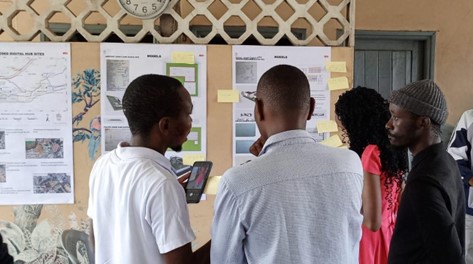
The 2010 Kenya Constitution emphasizes on citizen participation in all spheres of development. Citizens are encouraged to become active participants in shaping development outcomes rather than passive beneficiaries. To this end residents, community groups, civil society organizations, and local businesses should have meaningful opportunities to influence decisions that shape their cities, municipalities, towns and markets since these spaces offer opportunities for service delivery, markets for agricultural products, jobs and employment opportunities and better living standards.
Cities and urban areas are not built solely by governments, developers, or built environment professionals. Kenyan market traders, community leaders, youth groups, artists, transport operators, informal workers, entrepreneurs, and ordinary residents are essential creators of the urban landscape we see today. They possess local knowledge of what works and what has failed to support and meet their needs. In essence, they are better placed to determine what they need most and what will improve their quality of life. A responsive policy developed “by the people” values lived experience alongside technical expertise. A resilient Kenya urban development will be shaped by empowered citizens who are active architects engaged in drafting a new urban policy.
A National Urban Development Policy With the people
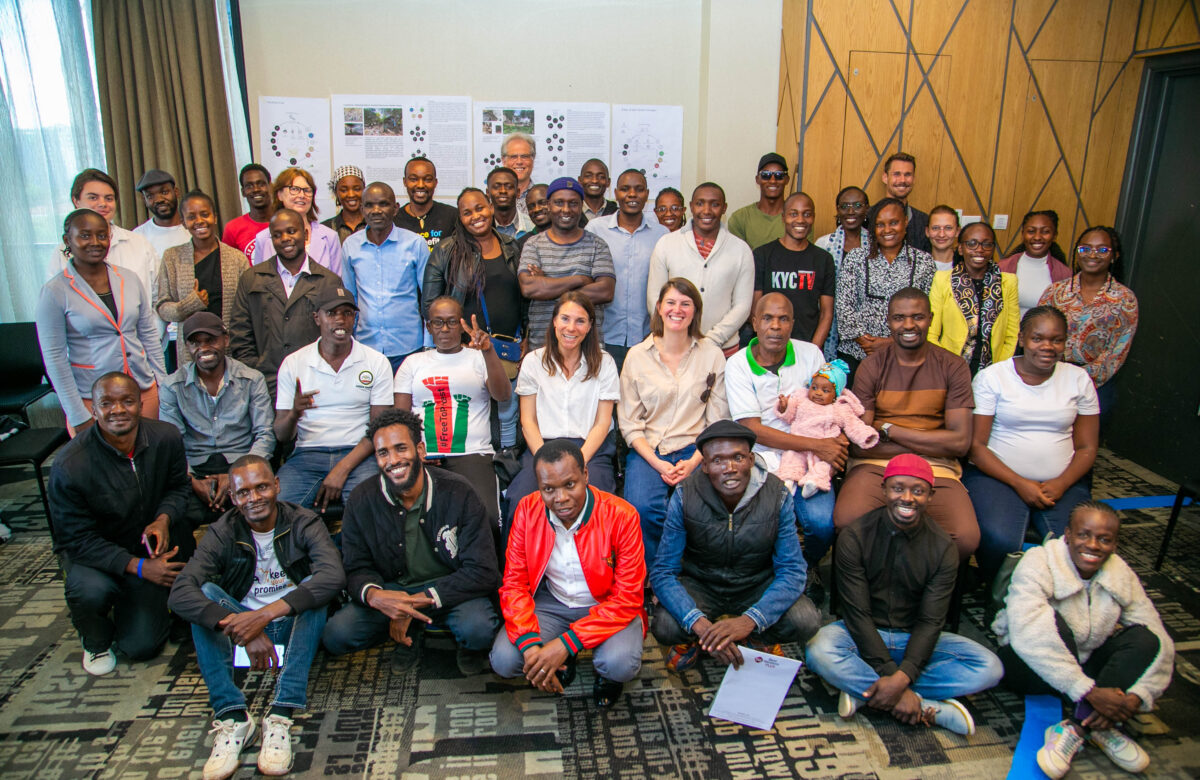
Developing a new urban development policy for Kenya should be a collaborative effort. In essence, no single actor can solve urban challenges facing Kenya today and, in the future, alone. Partnerships built on trust, transparency, and mutual respect create stronger foundations for sustainable urban futures.
A co-produced and co-created national policy in which national and county governments, communities, researchers, and the private sector work together in designing, implementing, and evaluating urban interventions is the ideal. This aligns closely with the principles of inclusivity, co-creation, and evidenced backed policy bench-marking against international standards.
The way forward for Kenya Urban Development Policy
Cities, municipalities, towns and markets in Kenya will continue to experience rapid urbanization in the coming decades. Despite this growing challenge, the role of these entities will be expected to grow intothe future as the country grows into an urbanised nation. This growth presents both opportunities and risks.
A new urban development policy that prioritizes infrastructure while neglecting community voices may inadvertently deepen inequality and social exclusion. From the onset, the proposed policy should embrace participation, inclusivity, and co-creation to unlock the creativity, knowledge, and resilience that already exist within urban communities. Community participation matters. This is a proven fact and policy makers and professionals alike should tap into the goodwill and expertise within. rResilience, climate change, youth, governance, sustainability, rural-urban linkages, information and communication technology are central to urban development and growth in Kenya. A new policy should be seen to promote an environment to prepare Kenya to become a significant urban growth hub in the Sub-Saharan region.
The guiding principle is simple yet transformative: The Kenya urban development policy must be for the people, by the people, and with the people. This is a path that will transform our urban areas into inclusive, resilient, and sustainable spaces with opportunities for citizens today and generations to come.