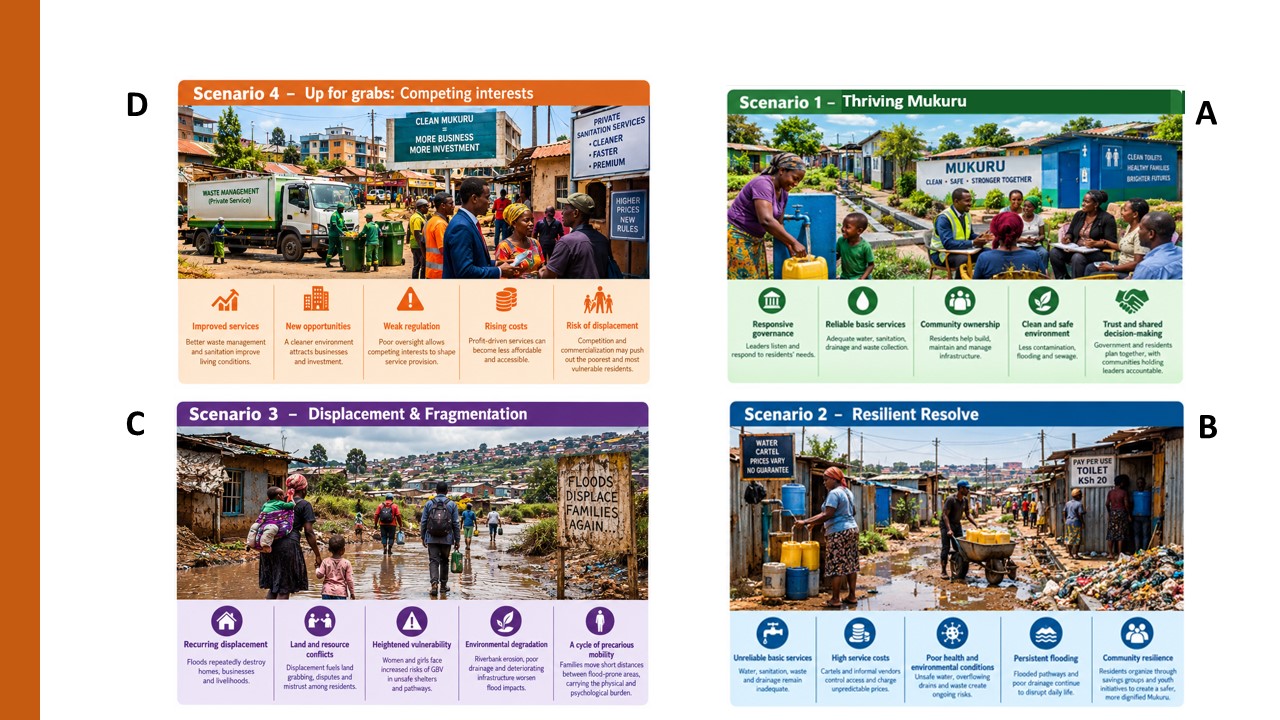
Workshop 2, therefore, was not about predicting which of these futures will happen, but about preparing for all of them. The guiding philosophy for the day was captured perfectly in a quote from Dwight D. Eisenhower: “Plans are worthless, but planning is everything.” The session was meticulously designed to move from theory to tangible, actionable strategies. Participants were tasked with three main objectives:
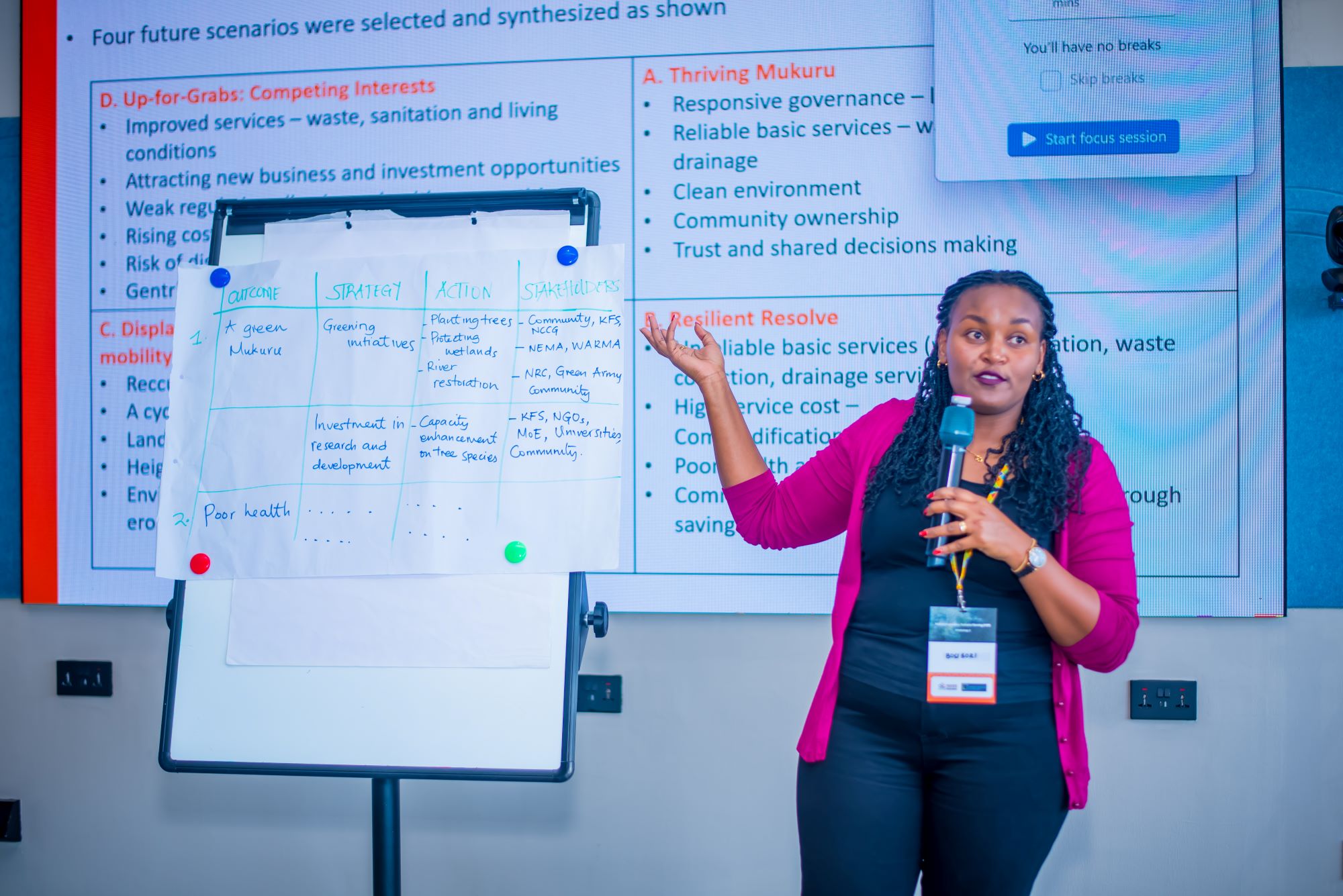
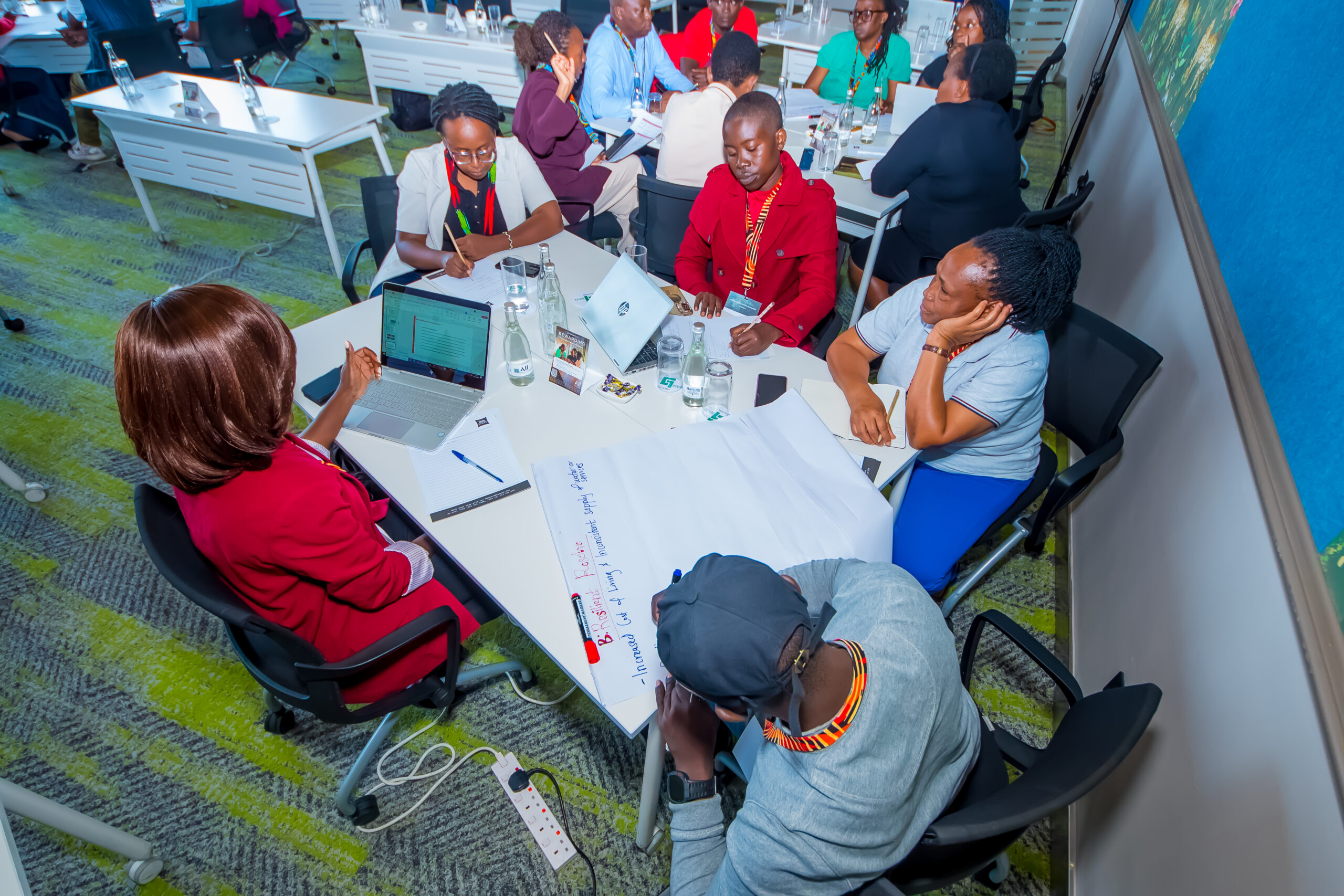
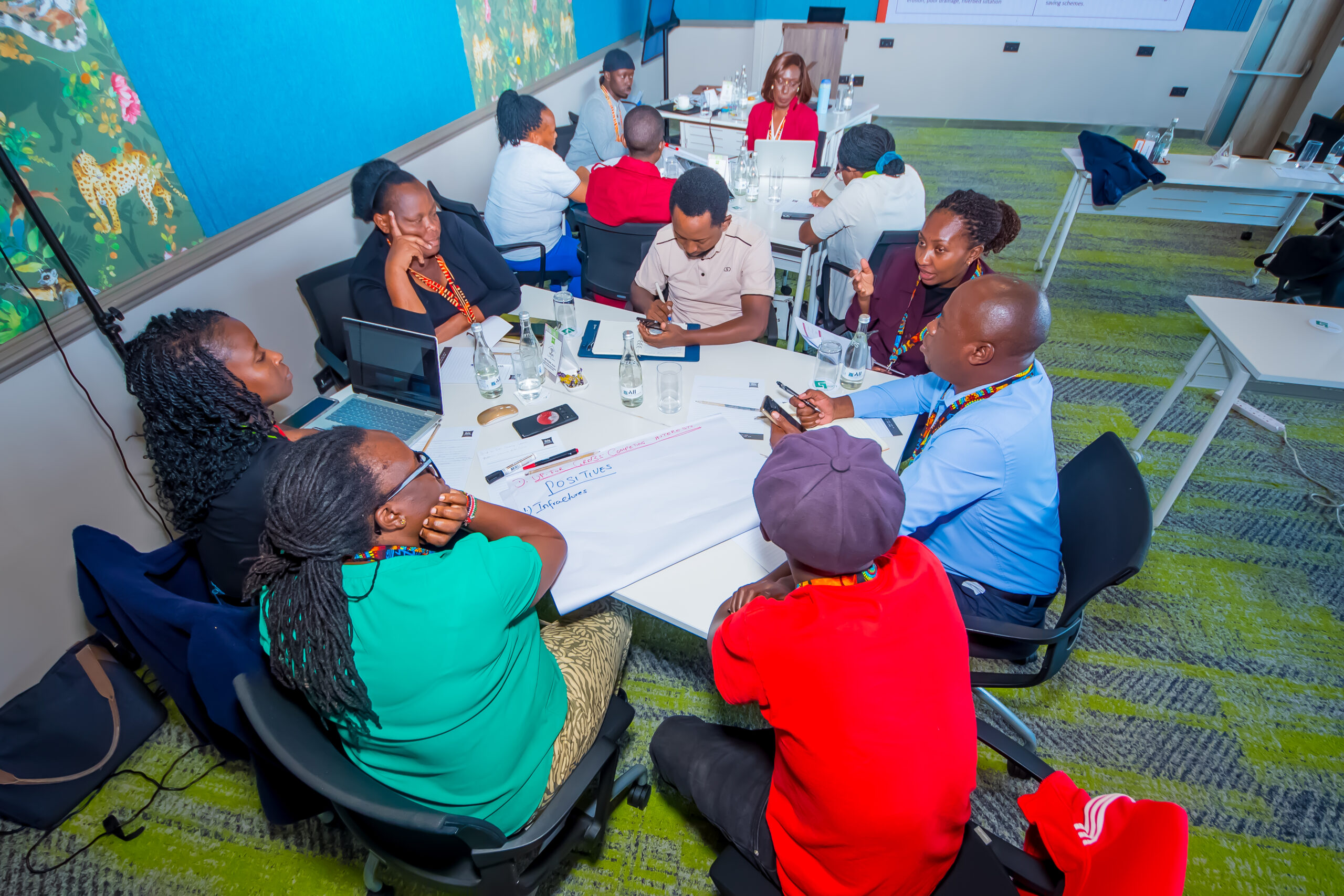
The methodology employed was highly collaborative and structured, ensuring that all voices in the room had an equal stake in the outcome. The first major activity focused on documenting the specific outcomes of the four scenarios, asking participants to brainstorm the opportunities and threats inherent in each future.
For instance, while “Thriving Mukuru” presented an opportunity for community ownership and shared decision-making, “Displacement and Fragmentation” posed severe threats like gender-based violence and continuous environmental degradation. By mapping out these realities, participants created a shared analytical foundation.
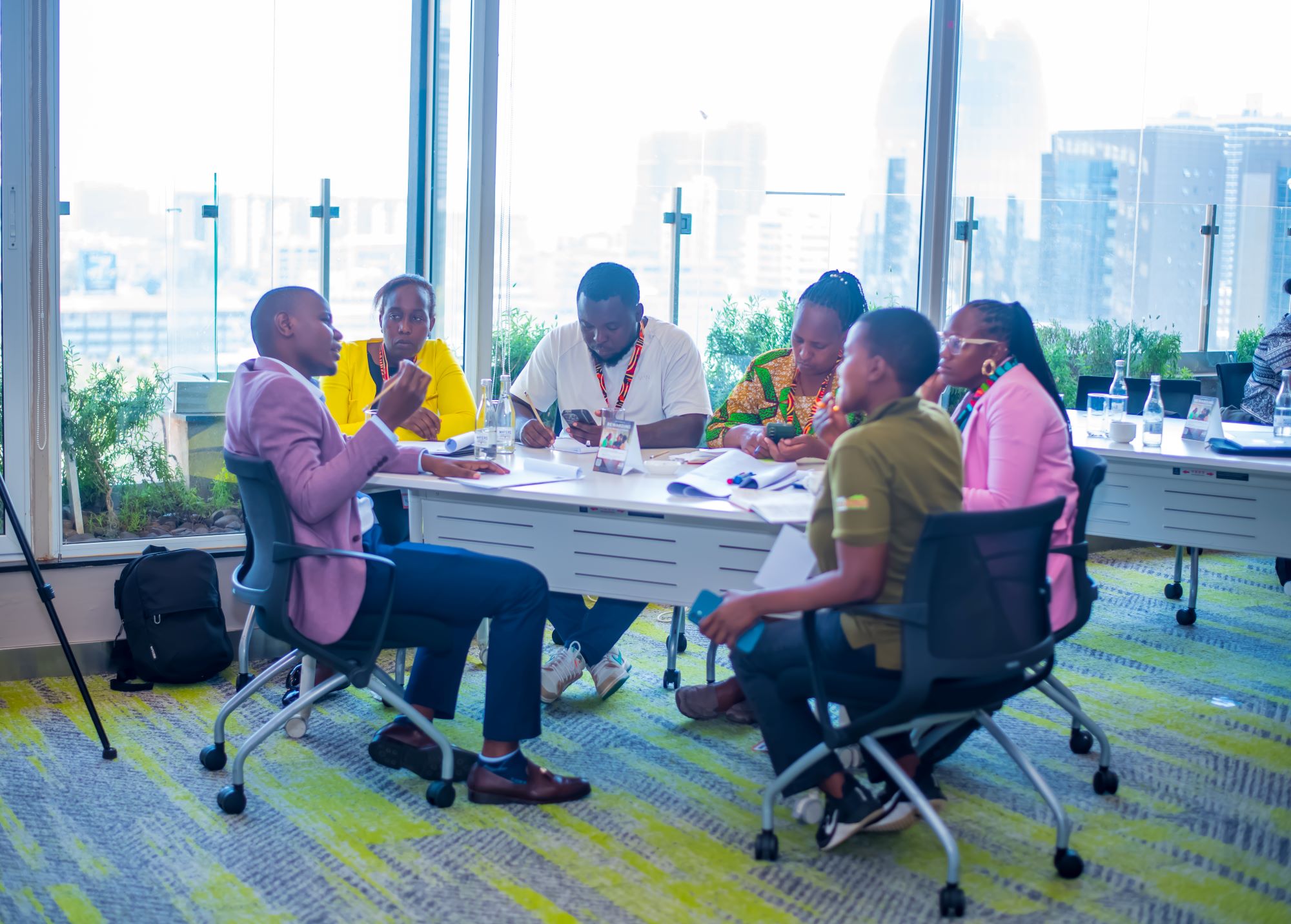
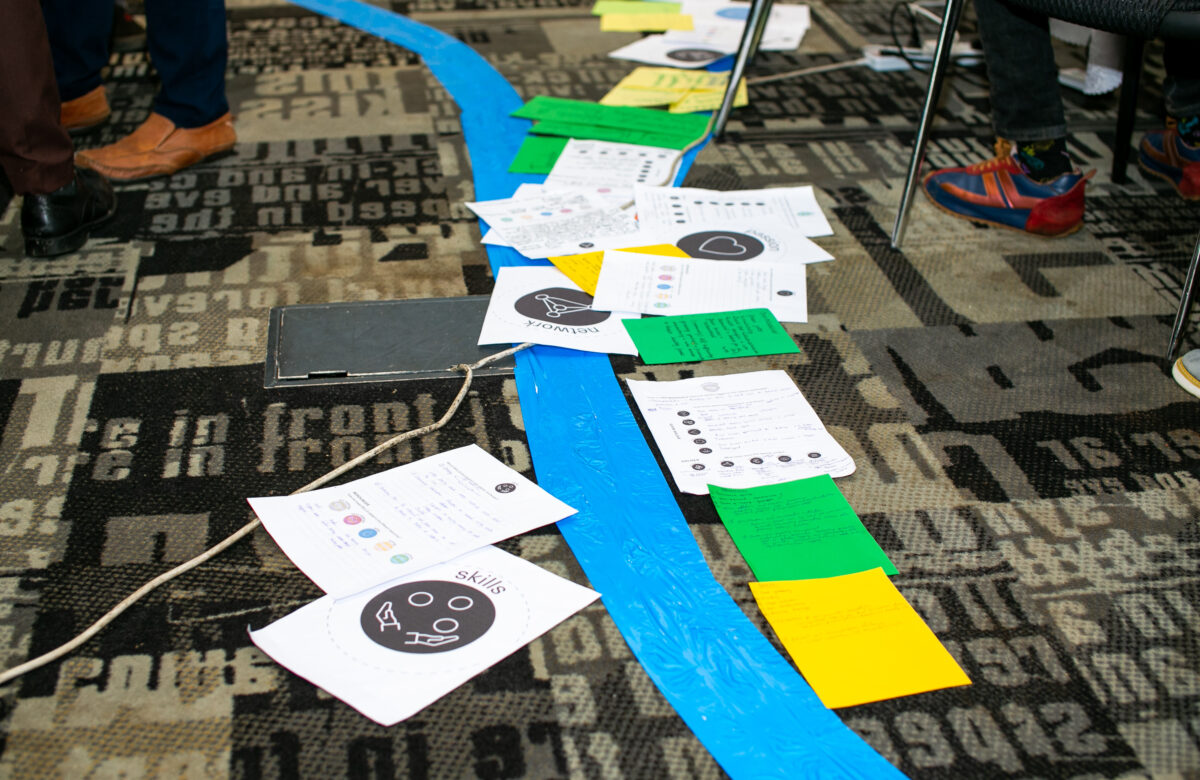
The heart of the workshop lay in the second activity: developing strategies. To do this effectively, participants utilized a strategic matrix, cross-referencing different actions to find commonalities. This cross-referencing was a vital step in moving away from reactive, single-issue solutions and toward “robust actions”. This phase was not just about brainstorming; it was about rigorous analytical testing. The final activity required participants to define the specific actions needed to mitigate undesirable conditions and, crucially, identify the stakeholders responsible for implementing them. This step moved the workshop from abstract planning into the realm of accountability and governance.
The backdrop to these rigorous planning sessions is the extensive, participatory research that has already been conducted on the ground. Through storytelling sessions and participatory GIS mapping, the project has already captured the harrowing realities of micro-mobility, the trauma of forced evictions, and the daily struggle to access basic services like water and sanitation. The presentation highlighted powerful, raw testimonies from residents who have had to raise their beds on bricks to sleep above the water line, or who have been forced to abandon homes due to sudden demolitions. These lived experiences are the fuel for the scenarios and strategies being developed.
Ultimately, Workshop 2 represents a monumental shift in how informal settlements are engaged in climate adaptation. Instead of being passive recipients of top-down aid or victims of state-led evictions, the residents of Mukuru are acting as co-researchers and co-planners. By systematically analyzing their vulnerabilities and identifying robust, actionable strategies, they are building a framework for a safer, more dignified existence. The findings and strategies developed in this workshop will be validated and ultimately synthesized into a toolkit, ensuring that the lessons learned in the floodplains of Nairobi can be carried forward to empower informal settlements facing similar climate-induced challenges across the globe.